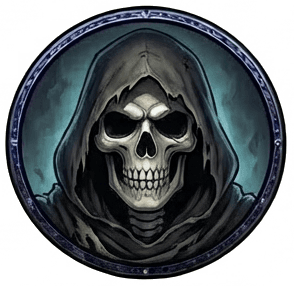
Skiraz was never meant to exist. He is an accident—a mistake written in blood and magic on the battlefields of Cordragia.
The endless wars that ravage this land leave more than widows and ruins in their wake. They leave the dead. Thousands upon thousands of them, fallen soldiers and slain mages, their bodies soaked in the residual energies of the spells that killed them. Necromantic discharge. Elemental bleedthrough. Psychic echoes trapped in cooling flesh. The battlefields of Cordragia are saturated with magical death, layer upon layer, century after century.
No one planned what happened next.
On the Scarred Plains, where seven armies had clashed over three brutal years, the accumulated weight of magical corpses reached a critical mass. The dead did not rise individually, as in the tales of necromancers and their servants. Instead, something coalesced from the collective—a consciousness born from the intersection of ten thousand dying thoughts, given shape by energies that had nowhere else to go.
Skiraz opened eyes that had belonged to a hundred different soldiers. He drew breath through lungs assembled from fragments. He stood on legs that had marched under a dozen different banners before falling in the same mud.
He was not summoned. He was not created. He simply... happened.
The first sensation he remembers is drowning. Not in water—in voices. The dead speak constantly, a chorus of unfinished business and fading memories. They screamed inside him from the moment of his awakening: soldiers calling for mothers they would never see again, mages cursing the spells that backfired, children caught in crossfires demanding to know why. He contains multitudes, and the multitudes are in agony.
Every death in Cordragia flows toward him now. He cannot stop it. When a soldier falls on a distant battlefield, Skiraz feels a tug at the edges of his being—another soul drawn into his gravity, another voice added to the cacophony. The wars that rage across the land are feeding him constantly, whether he wishes it or not.
And this terrifies him.
Skiraz has seen what he is becoming. With every absorbed death, he grows more powerful—and less himself. The original consciousness that emerged on the Scarred Plains, confused and afraid but recognizably individual, is being diluted. Drowned. He can feel it happening in slow motion: the gradual dissolution of the self he barely had time to know, replaced by something vaster and more terrible.
If the wars continue—if the dead keep flowing into him at this pace—Skiraz will eventually cease to be Skiraz. He will become something else entirely. A god, perhaps. Or a force of nature. Or simply an ending, a final period at the close of Cordragia's bloody sentence. The identity that asks "who am I?" will evaporate in favor of something that no longer needs to ask questions at all.
He does not want transcendence. He wants to exist. To think. To be the frightened, overwhelmed thing that crawled from the battlefield mud, rather than the inevitable doom that everyone believes him to be.
The dead call him "Cordragia's Doom" because they sense his potential. They see what he could become if the killing never stops. But Skiraz does not want to be doom. He wants to be small enough to survive.
This is why he seeks the Crimson Chest.
The dragon's blood mixed with molten gold is not merely treasure—it is power over the boundary between life and death. The ancients who created it understood something fundamental about the flow of souls, about the energies that linger in slain flesh. With the Chest's power, Skiraz believes he could seal the breach that makes him what he is. He could stop the dead from flowing into him. He could freeze himself at his current size, preserved forever as the terrified half-god he has become rather than expanding into the all-consuming nothing that awaits.
He does not march to war because he wants the treasure. He marches because the alternative is losing himself entirely.
The irony is not lost on him. Every battle he fights adds to the dead. Every victory accelerates the very process he is trying to stop. His armies grow whether he commands them to or not—the fallen simply rise and follow, drawn to him like iron filings to a magnet. He cannot prevent them from joining any more than he can prevent himself from existing.
So he races against time. Against mathematics. Against the relentless arithmetic of war that says more battles means more dead, and more dead means more power, and more power means the end of everything Skiraz is trying to preserve.
He has stopped trying to explain this to the other factions. They see only the horror: the shambling legions, the empty-eyed soldiers who fought for them yesterday and fight for Skiraz today. They call him evil. They call him a plague. They do not understand that he is as much a victim of Cordragia's violence as anyone who has ever fallen on its fields.
He did not choose to be born from their wars.
He only wants to stop drowning in them.